
GEO vs. SEO: What’s the Difference?
Key Takeaways✔ SEO importance helps you rank in search results; GEO helps your brand get referenced in AI-generated answers. ✔ AI summaries reward clarity, structure, and credible sourcing more than keyword density. ✔ Strong SEO increases your likelihood of being selected as an AI citation source. ✔ The most effective strategy in 2026 is integrated SEO: optimize for both SERPs and AI responses. ✔ People-first content that is specific, structured, and trustworthy is the only sustainable long-term approach. |
If you’re a business owner trying to grow online, here’s the immediate answer: SEO helps your site rank in traditional search results, while GEO digital marketing helps your brand get included (and cited) in AI-generated answers. Both matter now.
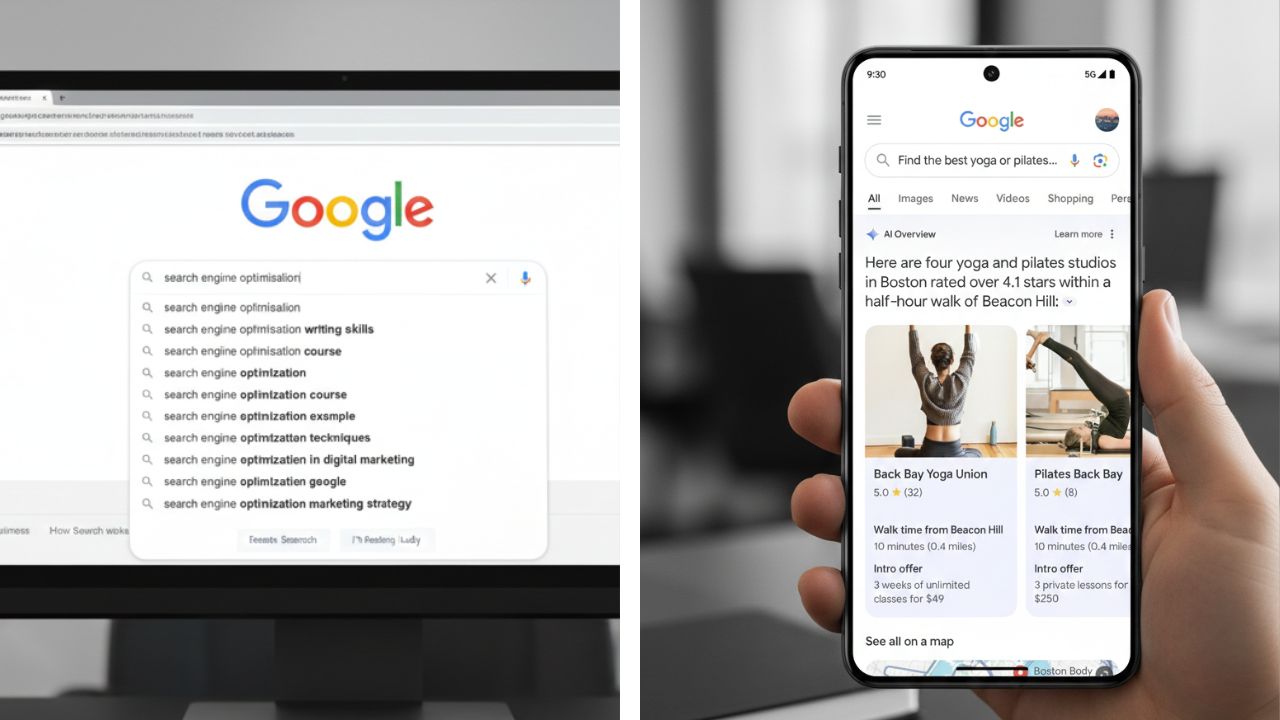
Search behavior has shifted fast. Google’s results increasingly include AI Overviews—summaries that pull from multiple sources and often satisfy the query without a click. At the same time, people use ChatGPT, Gemini, Perplexity, and other AI assistants to ask detailed questions and receive instant recommendations. These systems don’t just list links; they generate a response, which changes what “visibility” means.
That’s where geo marketing enters the conversation. Many digital marketing agencies are now pairing traditional SEO with GEO tactics because the goal isn’t only ranking—it’s being the source the AI trusts enough to reference.
Table of Contents
What Is GEO Marketing?
GEO stands for Generative Engine Optimization. It’s the practice of shaping your content so it can be accurately understood, selected, and cited by AI-driven search experiences, especially Google AI Overviews and AI assistants that synthesize answers.

Unlike SEO, where you fight for one of ten blue links on a search results page, GEO is about being included in the answer itself. That distinction matters because AI answers are becoming the first thing people see—and for many queries, the last thing they need.
What “Generative” Means in Search Today
Traditional search results are a directory. AI search is more like a research assistant: it reads multiple sources, extracts key points, and creates a summary. Google AI Overviews operate this way, bringing together information from across the web and showing supporting links.
This changes how brands compete. If your business is not part of the pool of trusted sources AI pulls from, you can lose visibility even if you still rank well on page one.
Why GEO Marketing Matters for Business Owners
For business owners, GEO matters because AI-driven answers influence decisions earlier and faster. When a user asks, “Who’s the best video production company near me?” and an AI summary lists a few options, that shortlist can shape leads.
Ahrefs describes GEO as getting your brand “noticed, and accurately represented, in AI-generated answers.” That word accurately matters, because weak content, vague positioning, or inconsistent brand signals can lead to misrepresentation—or no mention at all.
Why SEO Still Matters (And It’s Not Going Away)
SEO is still the foundation. In fact, most of the sources AI systems cite in overviews already come from content that performs well in traditional search. If your site is technically weak, lacks expertise, or lacks credibility signals, GEO becomes an uphill climb.
What SEO Does Best
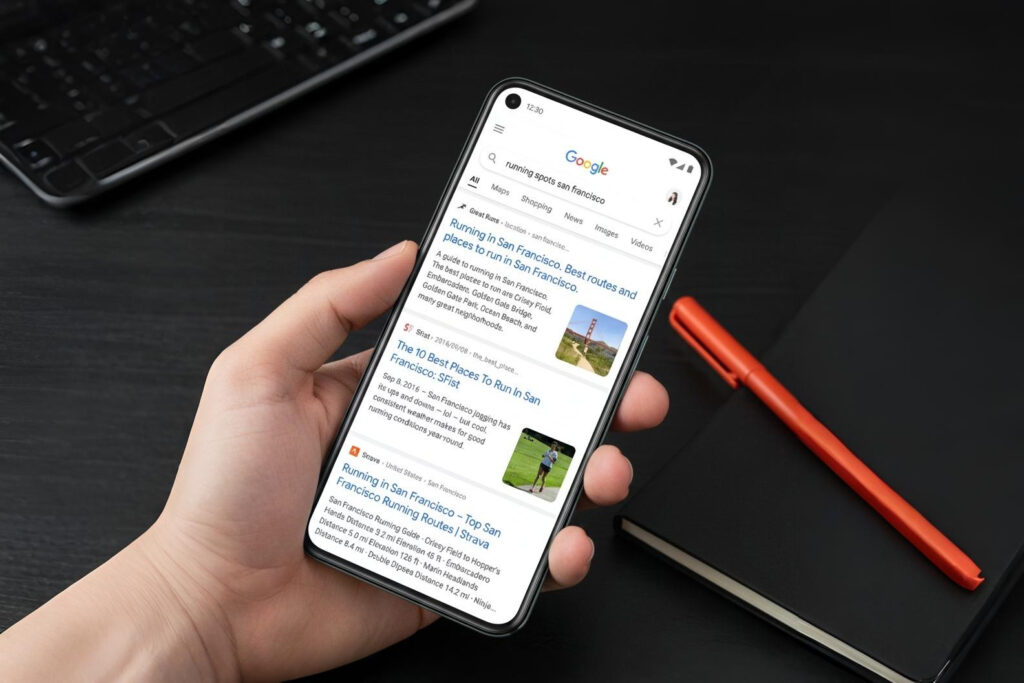
SEO remains the strongest lever for:
- Ranking for purchase-intent keywords
- Driving consistent, trackable website traffic
- Earning leads through high-performing service pages
- Building authority through topical depth and backlinks
For local businesses, local SEO (including maps, location pages, reviews, and structured data) remains one of the highest ROI marketing channels available.
What SEO Can’t Do Alone Anymore
Traditional SEO is designed around clicks. AI-driven search is designed around answers. Even with strong rankings, you might see fewer clicks for informational queries because the summary is displayed first.
That doesn’t mean SEO is “dying.” It means the job has expanded.
GEO vs. SEO: Key Differences That Matter for Modern Search
SEO helps you rank and earn clicks from traditional search results. GEO helps your brand get referenced when AI tools summarize and recommend options. Businesses that rely on lead generation should optimize for both because AI-driven answers can reduce clicks even when rankings stay strong.
Category | SEO (Search Engine Optimization) | GEO (Generative Engine Optimization / Geo Marketing) |
Core Goal | Ranks webpages in traditional search results | Gets your brand referenced or cited in AI-generated answers |
Search Experience | Links-based results (SERP rankings) | Answer-based results (AI summaries, assistants) |
Best Outcome | Higher rankings and more clicks | Inclusion as a trusted source in AI answers |
Optimization Focus | Keywords + technical SEO | Context + clarity + structured information |
SEO Priorities | Keyword targeting; metadata; backlinks; site speed/technical performance | Clear explanations; Q&A formatting; scannable headings; credible sourcing; schema + consistent entity signals |
GEO Priorities | — | Clear, direct answers; question-based formatting; structured headings; trustworthy claims; schema & entity consistency |
How People Search | Often keyword-driven (“best Tampa video company”) | Conversational (“Who’s the best video production company for a product launch in Tampa?”) |
Success Metrics | Rankings, impressions, CTR, traffic | Mentions/citations in AI Overviews, AI assistant recommendations, brand recall |
Key Insight | SEO performance can still be strong, but traffic patterns may shift | GEO improves visibility when AI answers reduce clicks |
GEO SEO Strategy: How to Optimize for Both
The best approach isn’t choosing between GEO and SEO. It’s building integrated SEO, where your content is structured to perform in classic rankings and AI-driven summaries at the same time.
What Integrated SEO Really Means in 2026
Integrated SEO means your content has:
- Traditional SEO fundamentals (technical, on-page, internal links, authority signals)
- Structured clarity designed for AI extraction (definitions, FAQs, step-by-step answers)
- Strong E-E-A-T signals (experience, expertise, authoritativeness, trust) aligned with Google’s guidance.
This is exactly why many modern digital marketing agencies are evolving service packages beyond “just SEO.”
Why Digital Marketing Agencies Are Shifting Toward GEO
Agencies aren’t shifting toward GEO because SEO stopped working. They’re shifting because the search landscape has expanded. Search Engine Land explains that AI tools now deliver direct answers, while search engines still list links, meaning brands need both strategies to maintain reach.
The end game is coverage: show up when customers search through Google and when they ask AI what to choose.
Frequently Asked Questions | GEO vs. SEO
Is GEO replacing SEO?
No. GEO does not replace SEO. Instead, SEO remains the foundation for rankings and trust signals that influence whether AI systems cite a source.
What are the key differences between SEO and GEO?
SEO improves rankings in traditional search results, while GEO improves how often your brand appears or gets cited in AI-generated answers.
What does GEO mean in SEO?
GEO means Generative Engine Optimization: content and brand optimization designed to improve visibility in AI-driven results like Google AI Overviews and assistant answers.
What is the difference between GEO and traditional SEO?
Traditional SEO is optimized for a ranked list of results. GEO is optimized for AI-generated answers that summarize information across sources.
What are the 4 types of SEO?
The four main types of SEO are on-page SEO, off-page SEO, technical SEO, and local SEO. Together, they help your site rank higher, load faster, earn trust online, and appear in local search results, especially for service-based businesses.
GEO SEO Strategy for Tampa Businesses
To stay visible in 2026, businesses need content that ranks in search and performs in AI summaries. SEO helps your website earn authority and discoverability, while GEO improves your chances of being mentioned and cited in Google AI Overviews and AI assistant recommendations. The most effective approach is integrated SEO: strong technical SEO + clear structured writing + consistent business signals (local pages, schema, reviews, and credible sourcing).
If you’re competing in a high-trust local market like Tampa video production, the opportunity is clear: the brands with the most structured, trustworthy, and specific content will be the ones AI tools recommend first.